Brain-Like Chips vs Traditional CPUs: Why Neuromorphic Computing Is the Next Big Shift in Technology


For years, traditional CPUs have quietly done their job. They’re in our laptops, phones, servers — basically everywhere. Most of the time, they handle it just fine.
But lately, I’ve been thinking… something feels off.
As artificial intelligence gets more sophisticated, traditional CPUs are starting to show cracks. Real-time learning, instant pattern recognition, and on-the-fly AI decision-making — these are heavy workloads CPUs weren’t really built for.
It makes you pause: what if computers didn’t just follow instructions, but actually thought a bit more like a human brain?
That’s the big idea behind brain-like chips, or neuromorphic processors. And in 2026, we’re finally seeing them leave research labs and appear in real-world systems. Sounds like sci-fi? I get it — but it’s happening.
Traditional CPUs: Where They Shine… and Where They Struggle
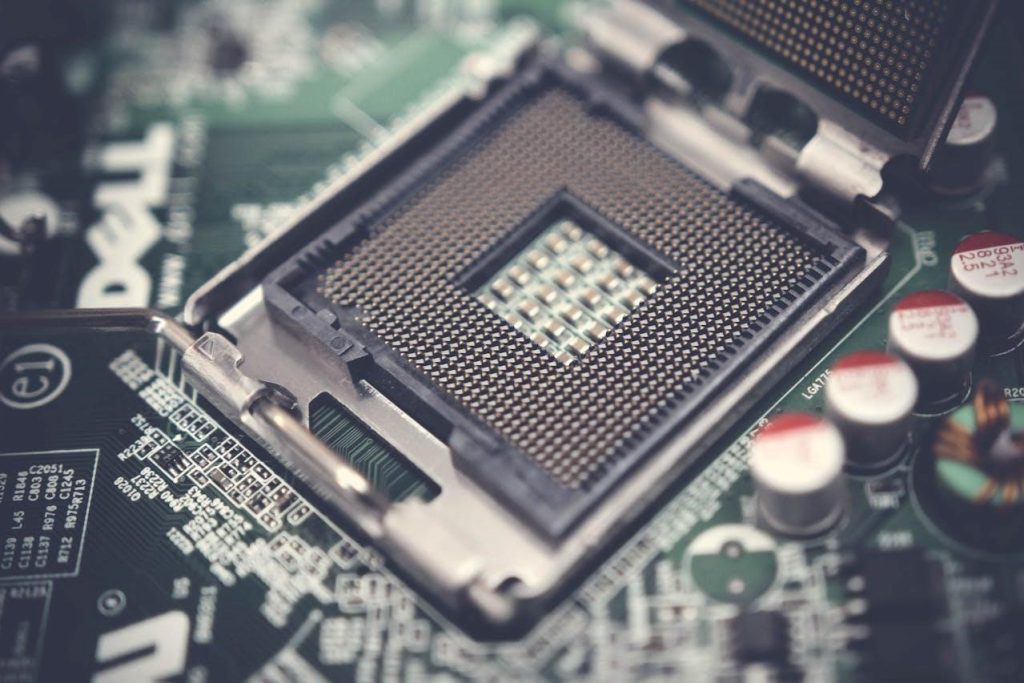
CPUs were built to handle one thing at a time, in order. Memory and computation sit separately, data moves back and forth constantly, and everything runs on a clock.
For everyday tasks — browsing, emailing, office apps — this works perfectly. CPUs handle it all without breaking a sweat.
But push them into AI-heavy work, and the limitations are clear:
- Real-time AI processing
- Continuous pattern recognition
- Tasks that require instant responses
…and suddenly, CPUs are sweating. Figuratively — and sometimes literally.
My Take
When I first looked at energy consumption for AI tasks on traditional CPUs, I couldn’t believe it. Millions of calculations per second, yet still struggling to keep up. It felt like trying to run a marathon in flip-flops.
Neuromorphic Chips: How They Work
Neuromorphic chips borrow ideas from the human brain. Memory and processing aren’t separate — they work together, like neurons and synapses.
Instead of following step-by-step instructions, these chips react to events as they happen. No wasted cycles. No extra energy burned. Just reactions — almost like the way we think naturally.
Key Traits
- Event-driven processing: act only when needed
- Massive parallelism: handle multiple tasks at once
- Ultra-low power usage
- On-device learning: adapt as you go
It’s more than an upgrade — it’s a new way of thinking about computation.
Comparing CPUs and Brain-Like Chips
Here’s the practical difference:
| Feature | Traditional CPU | Neuromorphic Chip |
| Processing Approach | Sequential, clock-driven | Parallel, event-driven |
| Energy Usage | High, especially for AI | Ultra-low, ideal for edge devices |
| Learning Ability | Mostly pre-trained models | Can learn and adapt in real time |
| Latency | Often relies on cloud | Instant, local decisions |
The contrast isn’t minor — it’s structural. And honestly, that’s the exciting part.
Why It Matters in 2026
Just making traditional hardware faster isn’t enough anymore. Meanwhile:
- AI models keep growing
- Edge devices need intelligence without cloud dependency
- Energy efficiency is a global priority
Neuromorphic chips are uniquely suited to tackle all three.
Real-World Examples
- Edge AI that works offline
- Autonomous drones and robots with instant reactions
- Smart sensors that understand patterns
- Medical wearables with long battery life
Seeing these applications in action is mind-blowing. This isn’t hypothetical — it’s real.

Low-Power AI: The Bigger Picture
Energy efficiency is huge. Data centers are massive energy consumers. Neuromorphic processors could help decentralize AI and reduce energy usage, while keeping devices smarter and more autonomous.
It’s not just a technical detail — it’s a sustainability issue. And for AI everywhere, it matters a lot.
Read more on IEEE Spectrum about neuromorphic computing
“Experts are already discussing how neuromorphic computing can reshape energy usage in AI.”
Will Neuromorphic Replace CPUs?
Not entirely — and that’s fine.
CPUs still dominate:
- General computing
- Legacy systems
- Precision-heavy tasks
Neuromorphic chips, however, shine on AI-specific workloads, especially at the edge. Think of it as a partnership, not a replacement.
My Two Cents
It feels like a natural evolution. We’re not discarding old tech — we’re just giving AI the tools it actually needs.
“Many researchers at MIT are exploring these chips’ potential for edge AI.”
Why You Should Care
Neuromorphic computing isn’t just about speed. It’s about rethinking how machines think. Engineers are creating systems that respond more organically — rather than forcing rigid intelligence.
If you’re building, studying, or just following tech trends, this is one shift you really don’t want to miss.
Final Thoughts
Brain-like chips aren’t just “another upgrade.” They challenge decades-old assumptions about computing.
As AI continues to advance, CPUs alone won’t be enough. Neuromorphic processors could bridge the gap between artificial intelligence and something closer to natural intelligence: efficient, adaptive, and intuitive.
Honestly? We’re only at the beginning of this journey.


