NVIDIA RTX Spark Explained: Specs, Release Date, and What It Means for Your Next Laptop
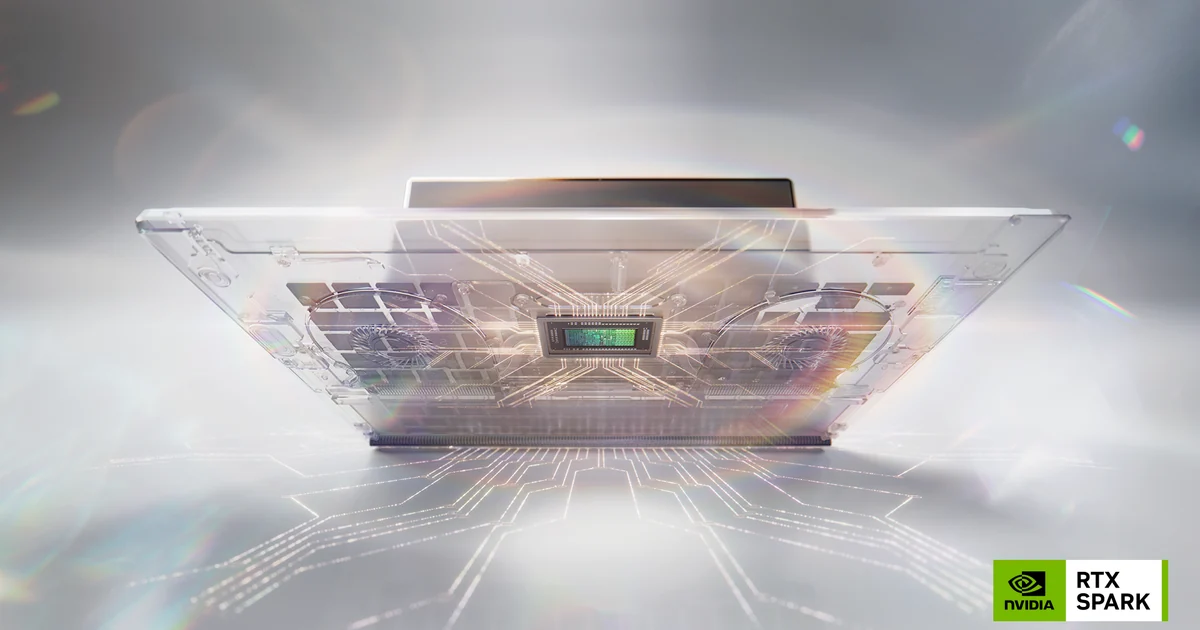

What is NVIDIA RTX Spark? It’s NVIDIA’s first consumer processor for Windows laptops — a single chip that combines an ARM-based CPU, a Blackwell RTX GPU, and up to 128GB of unified memory. Announced at Computex 2026, it’s designed to run AI workloads locally, handle serious creative tasks, and game at 1440p, all in a thin laptop chassis. Devices launch fall 2026.
That’s the short answer. But whether this chip actually matters for you depends on a few things that the press releases conveniently skip over.
I’ve been following PC hardware long enough to know that Jensen Huang’s keynote and the real-world product are sometimes two different things. So let’s actually break this down.
What Is NVIDIA RTX Spark, Exactly?
The Chip Inside
RTX Spark is what’s called a System-on-a-Chip (SoC) — meaning the CPU, GPU, and memory are all on one piece of silicon instead of separate components. That’s the same approach Apple uses with its M-series chips, and it’s a big departure from how NVIDIA has operated for the past 30 years as a GPU-only company.
The specs, as announced at Computex:
- CPU: 20-core ARM-based NVIDIA Grace (co-developed with MediaTek)
- GPU: Blackwell RTX with 6,144 CUDA cores (same count as an RTX 5070)
- Memory: Up to 128GB unified LPDDR5X, shared between CPU and GPU
- Memory bandwidth: Up to 300 GB/s
- AI performance: Up to 1 petaflop of FP4 compute
- Connection: NVLink-C2C chip-to-chip interconnect between CPU and GPU
The 128GB unified memory is the headline number. That’s what lets RTX Spark run 120-billion-parameter AI models locally, without sending your data to a cloud server. For context, most high-end gaming laptops today ship with 16-32GB of dedicated VRAM. RTX Spark blows past that entirely.
The GPU punches at RTX 5070-class level — something we broke down in detail in our RTX 50 SUPER breakdown.

Photo by Adi Goldstein on Unsplash
Why NVIDIA Is Doing This
NVIDIA has dominated AI data centers for years. RTX Spark is essentially their bet that the next frontier is your desk. Jensen Huang framed it on stage as moving the PC “from tool to teammate” — the idea being that AI agents will run persistently on your machine, handling tasks in the background without needing a cloud connection.
It’s also a direct challenge to Apple Silicon. NVIDIA watched Apple take the premium laptop market with unified memory architecture starting in 2020, and RTX Spark is the Windows answer. The difference is NVIDIA brings CUDA, DLSS, and RTX ray tracing into the equation — software stacks that Apple simply doesn’t have.
What Can RTX Spark Actually Do?
AI and Local Models
This is where RTX Spark is genuinely impressive on paper. Running a 120B-parameter model locally — with a 1 million token context window — is not something any consumer laptop can do today. That’s a data-center-class workload running in a 1.3kg chassis.
Practically speaking, that means running AI coding assistants, image generators, and agent workflows without a subscription, without latency, and without your data leaving the machine. For developers and power users who care about privacy, that’s a real differentiator.
For the full software stack breakdown, see NVIDIA’s official RTX Spark page.
Gaming
NVIDIA claims 1440p gaming at 100+ FPS with ray tracing, backed by DLSS 4.5 and Reflex. The 6,144 CUDA cores give it RTX 5070-class raw GPU power, which is legitimate. DLSS Multi Frame Generation will do a lot of heavy lifting here.
The honest caveat — and it’s a meaningful one — is that RTX Spark runs on ARM architecture, not x86. Most PC games are built for x86. The ones without a native ARM build run through Microsoft’s Prism emulation layer, which works for most titles but isn’t a guarantee. NVIDIA has confirmed anti-cheat support for major competitive games like Fortnite and Valorant, but the long tail of your Steam library is a different story.
If gaming is your primary use case, an x86 gaming laptop remains the safer bet for now.
Creative Work
Adobe is rebuilding Photoshop and Premiere specifically for RTX Spark, with full GPU acceleration targeting 2x faster performance. Blender, DaVinci Resolve, and CapCut all run natively on ARM already. The 128GB memory pool means editing 12K video or rendering huge 3D scenes without hitting a wall.
For creators, this is probably the strongest use case right now.
RTX Spark Release Date and Which Laptops Will Have It
Devices launch fall 2026. No specific date confirmed yet.
The first wave of RTX Spark laptops comes from ASUS, Dell, HP, Lenovo, Microsoft, and MSI. Acer and GIGABYTE follow shortly after. Microsoft’s own entry is the Surface Laptop Ultra, which features the full 128GB configuration.
No official pricing has been announced. Based on leaked Lenovo Yoga Pro specs and the premium positioning (OLED displays, machined aluminium, all-day battery), expect the realistic starting range to sit somewhere between $1,500 and $2,500+. The lower-end configurations with 16GB of RAM will exist, but that kind of defeats the purpose.
The Catch Nobody Is Talking About Enough
Two things worth saying plainly.
First, ARM compatibility is still not a solved problem on Windows. NVIDIA’s claim that RTX Spark will run “every application Windows has ever run” is a bold statement — and technically it relies on Prism emulation, which is much better than it used to be but not perfect. Older software, certain drivers, and kernel-level apps (including some anti-cheat systems) can still break. Qualcomm has been promising the same thing for years with Snapdragon PCs, and compatibility issues are still why most people stick to x86.
What changes the math here is NVIDIA’s weight in the industry. When the company that controls 80%+ of AI compute tells developers to build ARM-native apps, they actually listen. That’s a different dynamic than Qualcomm asking nicely. But it still takes time.
Second, the price. RTX Spark is a premium play. If the realistic configurations land above $2,000, NVIDIA is competing against Apple MacBook Pros that already have a proven track record, a massive native app ecosystem, and loyal users. That’s a tough fight, even with better GPU specs on paper.
How-To Geek lays out the skeptic case for why RTX Spark laptops face an uphill battle.
Is This the Laptop Chip You’ve Been Waiting For?
Depends entirely on who you are.
If you’re a developer, AI researcher, or creative professional who wants to run large models locally and work in Adobe’s ecosystem — RTX Spark is genuinely exciting. The specs are real, the software partnerships are real, and the unified memory advantage over anything x86 is real.
If you’re primarily a gamer, wait. Let x86 laptops remain your default until real-world RTX Spark gaming benchmarks come out. The GPU is powerful enough, but ARM compatibility on games is still a gamble you don’t need to take yet.
If you’re an everyday user who just wants a fast, reliable laptop — you’re not the target audience. A Snapdragon X or Intel Core Ultra laptop does everything you need at a lower price, with zero compatibility anxiety.
If that’s you, our WFH laptop picks are a better starting point.
I’m keeping a close eye on the fall launch. The moment review units hit, the ARM compatibility question gets answered for real. Until then, everything — including NVIDIA’s own claims — is still marketing. (I’m cautiously optimistic, for what it’s worth.)
Frequently Asked Questions
What is NVIDIA RTX Spark?
NVIDIA RTX Spark is an ARM-based system-on-chip for Windows laptops and compact desktops, combining a 20-core Grace CPU, a Blackwell RTX GPU with 6,144 CUDA cores, and up to 128GB of unified memory. It’s designed for local AI workloads, creative tasks, and gaming. Devices launch fall 2026.
When do RTX Spark laptops come out?
Fall 2026. ASUS, Dell, HP, Lenovo, Microsoft Surface, and MSI will be first. No exact launch date or official pricing has been confirmed yet.
Can RTX Spark run all Windows games?
Most modern titles, yes — particularly those with ARM-native builds or anti-cheat support from EAC and BattlEye. Older games or those with kernel-level anti-cheat may have issues. NVIDIA’s full compatibility claim relies on Microsoft’s Prism emulation layer, which continues to improve but isn’t universal.
Is RTX Spark better than Apple M-series chips?
On GPU performance and AI compute, RTX Spark is competitive or better — particularly for CUDA-based workloads. Apple Silicon has a larger native app ecosystem and proven battery life. The real comparison will only be possible once benchmarks from shipping devices arrive.


